
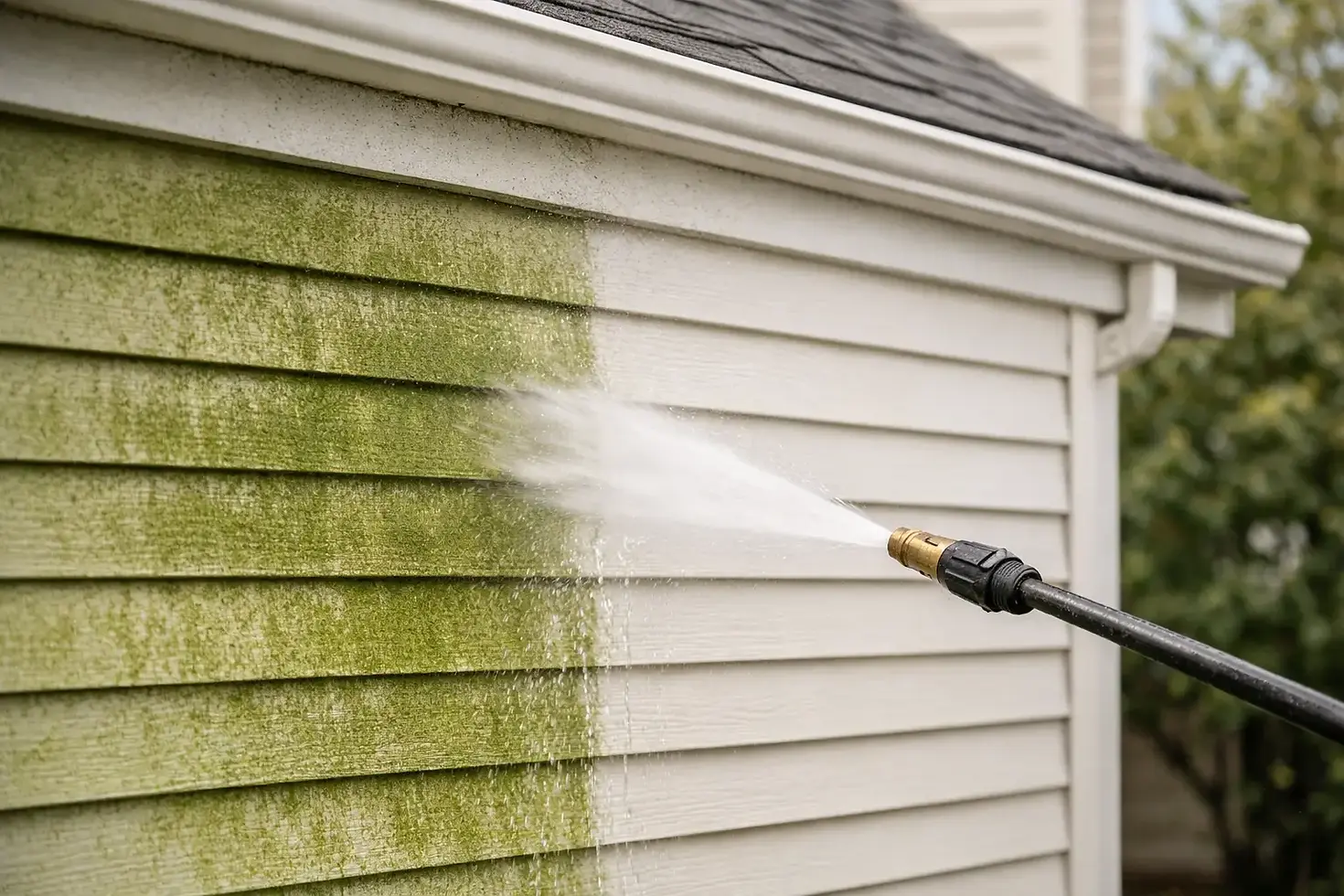
Algae on Siding Removal Done Safely
- Chris Aikin
- 2 days ago
- 6 min read
Green streaks on siding usually start small - a little discoloration near the shaded side of the house, a few marks under gutters, maybe a patch that never seems to dry out. Then one season turns into two, and suddenly the home looks older and dirtier than it really is. That is why algae on siding removal matters. It is not just about appearance. Left alone, that buildup can trap moisture against the surface, make routine maintenance harder, and shorten the clean, well-kept look homeowners want from their exterior.
Why algae shows up on siding in the first place
Algae thrives where moisture hangs around. On most homes, that means north-facing walls, shaded sections under trees, areas behind downspouts, and spots where sprinkler overspray or poor drainage keeps the siding damp longer than it should be. It does not always mean the siding is failing. More often, it means the environment around that section of the home is giving growth the conditions it needs.
In Colorado, homeowners also deal with a mix of sun, snow, wind, and sudden weather swings. That combination can leave dust and debris on siding, and once organic residue builds up, algae has an easier time sticking around. Vinyl, painted siding, fiber cement, stucco, and composite materials can all show signs of growth. Some surfaces hide it better at first, but none are immune if moisture and shade are consistent.
A lot of homeowners assume green staining is just dirt. Sometimes it is a mix of both. The difference matters because regular rinsing may wash off loose soil without actually treating the organic growth underneath. If the algae is not fully addressed, the stains often return faster than expected.
Algae on siding removal is not one-size-fits-all
This is where many cleaning problems start. People see discoloration, grab a pressure washer, and assume more force will solve it. On the right surface and in the right hands, pressure washing has its place. But for many siding materials, especially vinyl and painted exteriors, too much pressure can do more harm than the algae itself.
High pressure can force water behind siding panels, strip paint, leave visible lines, or scar softer materials. It can also damage trim, vents, and caulking. The goal is not to blast the stain off at any cost. The goal is to remove algae thoroughly while protecting the exterior.
That is why professional house washing often relies on soft washing for siding. Soft washing uses low-pressure water paired with cleaning solutions designed to break down organic growth safely on the surface. The treatment does the heavy lifting, not raw force. For concrete or other hard surfaces nearby, a different method may be appropriate. Good exterior cleaning depends on matching the process to the material.
What a safe cleaning process should include
A proper siding wash starts with identifying the surface and the level of buildup. Not every home needs the same approach. Light surface algae on newer vinyl may come off easily with a soft wash process. Older painted siding with oxidation, chalking, or existing wear may need more caution.
Before cleaning begins, the surrounding area should be considered too. Landscaping near the foundation, electrical fixtures, screens, and painted trim all need attention. Pre-rinsing, controlled application, and thorough rinsing afterward help protect the property while allowing the cleaning solution time to work.
The actual removal process should be even and measured. If one section is treated aggressively and another is not, the results can look patchy. That is especially noticeable on larger walls where algae has spread unevenly. Consistency matters as much as power.
After cleaning, the siding should look cleaner without looking stressed. That means no gouges, no loosened panels, and no water driven where it does not belong. A good result is not just stain removal on day one. It is a clean exterior that still performs the way it should.
When algae is more than a cosmetic issue
Sometimes homeowners put off cleaning because the house still feels structurally fine. That is understandable. Algae often starts as an aesthetic problem. But it can become a maintenance issue over time.
When organic growth sits on siding, it tends to hold moisture longer against the surface. That can contribute to discoloration, increase grime buildup, and make annual cleaning more difficult. It can also hide early signs of other exterior problems, such as caulk failure, clogged gutter discharge, or areas that are staying damp longer than they should.
That does not mean every patch of algae signals serious damage. It usually does not. But it does mean the staining is worth addressing before it becomes part of a larger cycle of moisture and buildup. In many cases, cleaning the siding also helps reveal whether there is a drainage or shade-related issue that should be corrected.
Why DIY results are mixed
Some homeowners are comfortable handling small exterior tasks, but algae removal is one of those jobs that often looks easier than it is. The challenge is not just getting the siding wet. It is knowing how much pressure the material can handle, how to treat organic staining evenly, and how to avoid damage while working around ladders, hose lines, and landscaping.
Store-bought equipment can sometimes remove surface marks, but it may leave behind the root of the problem. In other cases, homeowners end up with clean spots and dirty spots, tiger striping, or damaged siding from getting too close with the nozzle. On multistory homes, safety becomes another real concern.
There is also the question of time. Exterior washing takes longer than most people expect, especially if the growth has built up over multiple seasons. For many homeowners, hiring a professional is less about convenience alone and more about avoiding the risk of making the exterior look worse.
What professional service changes
A professional cleaning company should bring more than equipment. The real value is judgment. That means knowing when to soft wash, when higher pressure is appropriate, how to work around delicate surfaces, and how to get a uniform result across the home.
For homes in the Denver metro area, local experience also helps. Exposure, elevation, wind-driven debris, snowmelt patterns, and sprinkler use can all affect where algae forms and how stubborn it becomes. A service provider who works on Colorado homes regularly is more likely to spot those patterns and clean accordingly.
Drift Exteriors focuses on surface-specific cleaning methods for that reason. The goal is strong results without treating every exterior the same way. For homeowners, that usually means less guesswork and more confidence that the siding will be cleaned safely.
How often siding should be cleaned
There is no perfect schedule for every property. Some homes can go longer between cleanings because they get more direct sun and dry quickly. Others need more frequent attention because of tree cover, north-facing exposure, or recurring moisture near one side of the house.
For many homeowners, an annual or every-other-year house wash is enough to stay ahead of visible algae and grime. If you wait until the staining is heavy, removal can take more effort and the exterior may look neglected in the meantime. Preventive cleaning is usually easier on the siding and better for curb appeal.
If one section of the house keeps turning green faster than the rest, that is worth noting. Repeated growth often points to a moisture pattern that should be checked, whether that is splashback, gutter overflow, or an area that simply never gets enough sun.
Signs it is time to schedule algae on siding removal
You do not need to wait until the whole house looks stained. Early signs are enough. Green or dark streaks, especially on shaded walls, are the most obvious clue. So is siding that looks dingy even after rain. If the discoloration is concentrated below gutters, near hose bibs, or behind shrubs, moisture is likely part of the issue.
Another sign is when your home looks clean from the street but patchy up close. That usually means buildup is starting to spread. Taking care of it early often leads to a better result and a simpler cleaning process.
A cleaner exterior, without unnecessary risk
Algae on siding removal should improve your home, not create a second problem. The right cleaning method protects the material, restores a cleaner appearance, and helps break the cycle of moisture and buildup that causes staining to come back. For homeowners, that means looking beyond quick fixes and choosing an approach that fits the surface.
If your siding is showing green streaks or dark organic staining, it is worth addressing before it settles in deeper. A careful wash can make the home look better right away, but just as important, it helps keep the exterior in better condition season after season.


Comments